
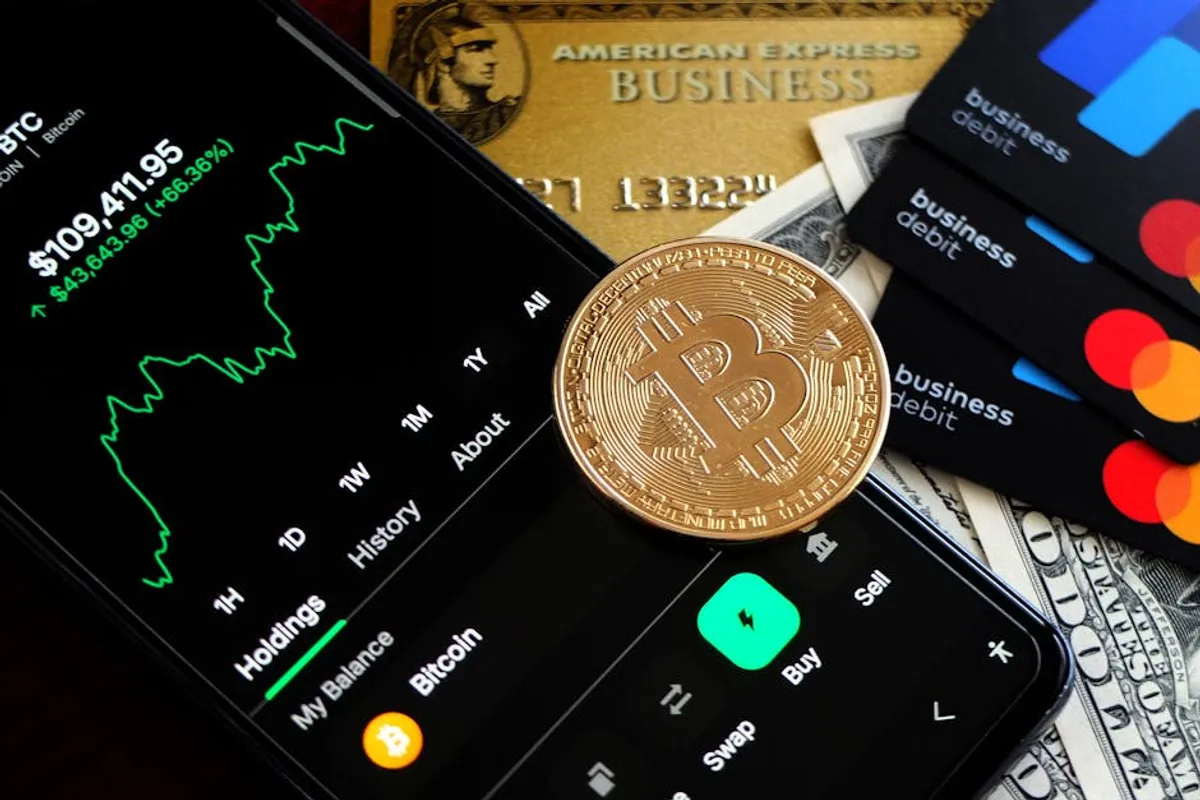
Understanding Bitcoin’s price dynamics is essential for anyone engaged with the asset, from individual investors and traders to businesses considering cryptocurrency integration. Bitcoin operates in a global, 24/7 market, making its valuation a complex interplay of supply, demand, macroeconomic shifts, and technological developments. For those looking to allocate capital, manage risk, or simply interpret market signals, a clear grasp of these underlying forces is critical for informed decision-making. This analysis provides a framework for comprehending the factors that influence Bitcoin's value, enabling a more strategic approach to its inherent volatility.
Current Market Posture and Price Trends
Bitcoin's market behavior is characterized by distinct cycles, often exhibiting periods of rapid appreciation followed by significant corrections or consolidation. Recent market phases have shown a heightened sensitivity to global economic indicators and shifts in institutional sentiment. While daily fluctuations can be substantial, the asset typically follows broader trends influenced by its unique supply mechanics and evolving demand profile.
Observable Price Trends
- Short-Term Volatility: Intraday and weekly price movements can be pronounced, driven by news events, technical trading patterns, and algorithmic trading. These rapid shifts require careful risk management for active participants.
- Medium-Term Cycles: Bitcoin's price often follows multi-month or multi-year cycles. These are frequently associated with halving events, which reduce the supply of new Bitcoin entering the market, historically preceding periods of increased price discovery.
- Long-Term Adoption Trajectory: Despite short and medium-term fluctuations, the overarching trend since Bitcoin's inception has been one of increasing value, driven by expanding adoption, infrastructure development, and growing recognition as a legitimate asset class.
Core Drivers Influencing Bitcoin's Price
Bitcoin's valuation is not arbitrary; it stems from a combination of fundamental, technical, and psychological factors. These drivers can be categorized into supply-side mechanics, demand-side pressures, and broader market sentiment.
Supply-Side Dynamics
Bitcoin's supply is inherently deflationary and predictable, a core tenet of its design. This fixed supply schedule forms a foundational element of its value proposition.
- Halving Events: Approximately every four years, the reward for mining new blocks is cut in half. This reduces the rate at which new Bitcoin enters circulation, creating a supply shock that has historically preceded significant price increases due to unchanged or increasing demand.
- Fixed Supply Cap: Capped at 21 million Bitcoins, the absolute scarcity of the asset is a primary driver. Unlike fiat currencies, it cannot be arbitrarily inflated.
- Mining Difficulty: The computational effort required to mine Bitcoin adjusts approximately every two weeks. Higher difficulty indicates more miners are competing, often reflecting a belief in future price appreciation, though it also increases the cost of production for miners.
Demand-Side Pressures
The demand for Bitcoin is multifaceted, evolving from niche interest to significant institutional and retail participation.
- Institutional Adoption: Increased interest from hedge funds, asset managers, and corporate treasuries, alongside the approval of spot Bitcoin Exchange Traded Funds (ETFs) in various jurisdictions, has opened new avenues for capital influx. This legitimizes the asset and provides regulated investment vehicles.
- Retail Investor Sentiment: Public perception, media coverage, and social media trends significantly influence individual investor behavior. Periods of strong positive sentiment can lead to rapid price surges, while negative news can trigger sell-offs.
- Macroeconomic Factors: Global inflation concerns, interest rate policies by central banks, and geopolitical instability can drive investors towards Bitcoin as a perceived hedge against traditional financial system risks or currency debasement. Conversely, periods of economic stability or rising interest rates can reduce speculative appetite.
- Regulatory Environment: Clarity or uncertainty in government regulations regarding cryptocurrency can profoundly impact market sentiment and investment flows. Favorable regulatory frameworks encourage adoption, while restrictive measures can deter it.
- Technological Developments: Upgrades to the Bitcoin network (e.g., Taproot) or advancements in scaling solutions (e.g., Lightning Network) can enhance its utility and efficiency, potentially increasing demand.
Market Sentiment and Derivatives
Beyond fundamental supply and demand, market sentiment, often reflected in derivatives markets, plays a significant role in short-to-medium term price action.
- Futures and Options Markets: The activity in Bitcoin futures and options markets provides insights into traders' expectations for future price movements. High open interest or specific funding rates can indicate bullish or bearish biases.
- On-Chain Metrics: Analysis of the public Bitcoin blockchain can reveal investor behavior. Metrics like exchange netflows (Bitcoin moving onto or off exchanges), long-term holder supply, and the Spent Output Profit Ratio (SOPR) offer clues about accumulation, distribution, and overall market profitability.
Pro Tip: Avoid making investment decisions based solely on short-term price movements or social media hype. Develop a disciplined approach that integrates fundamental analysis, understanding of market cycles, and a clear risk management strategy. Chasing pumps often leads to suboptimal outcomes.
Strategic Approaches to Bitcoin Exposure
For those considering exposure to Bitcoin, several avenues exist, each with varying levels of complexity and risk.
- Direct Purchase: Acquiring Bitcoin directly through reputable exchanges and storing it securely in a personal wallet provides direct ownership and control.
- Exchange-Traded Funds (ETFs): In jurisdictions where available, spot Bitcoin ETFs offer a regulated and accessible way to gain exposure to Bitcoin's price movements without directly holding the asset. This can simplify custody and compliance for some investors.
- Dollar-Cost Averaging (DCA): Implementing a DCA strategy involves investing a fixed amount of money at regular intervals, regardless of the asset's price. This approach mitigates the risk of buying at a market peak and smooths out the average purchase price over time.
Navigating Bitcoin's Volatility: Informed Decisions
Bitcoin's price trajectory is influenced by a dynamic combination of technical scarcity, evolving demand, and global economic forces. For investors and businesses, a structured understanding of these drivers is not merely academic; it is foundational for constructing resilient portfolios and making strategic operational choices. By focusing on long-term trends, interpreting on-chain signals, and adhering to sound risk management principles, participants can navigate the inherent volatility of the Bitcoin market with greater confidence. Continuous monitoring of macroeconomic shifts and regulatory developments will remain crucial for adapting to the asset’s evolving landscape.
Frequently Asked Questions
What is a Bitcoin halving event and how does it affect price?
A Bitcoin halving is a pre-programmed event that occurs approximately every four years, reducing the reward miners receive for validating new blocks by 50%. This decreases the rate at which new Bitcoin enters circulation, creating a supply shock. Historically, halvings have preceded significant price appreciation due as supply growth slows while demand often remains constant or increases.
How do macroeconomic factors influence Bitcoin's price?
Macroeconomic factors such as inflation rates, interest rate policies by central banks, and global economic stability can significantly impact Bitcoin. During periods of high inflation or economic uncertainty, investors may seek Bitcoin as a hedge against traditional currency devaluation. Conversely, rising interest rates can make riskier assets like Bitcoin less attractive compared to safer, yield-bearing investments.
Is Bitcoin a safe investment?
Bitcoin is a highly volatile asset, and its price can fluctuate dramatically. While it offers potential for significant returns, it also carries substantial risk, including regulatory uncertainty, technological vulnerabilities, and market manipulation. It is not considered a "safe" investment in the traditional sense but rather a high-risk, high-reward asset. Investors should conduct thorough research and only invest what they can afford to lose.
What are "on-chain metrics" and why are they important?
On-chain metrics are data points derived directly from the Bitcoin blockchain, providing insights into network activity and investor behavior. Examples include the number of active addresses, transaction volume, exchange netflows (the movement of Bitcoin onto or off exchanges), and long-term holder supply. These metrics help analysts gauge market sentiment, accumulation/distribution patterns, and potential shifts in supply and demand that can influence price.